Best Organic Baby Formulas From Our Tests
These products have a lower risk of lead, arsenic, and other contaminants

When you shop through retailer links on our site, we may earn affiliate commissions. 100% of the fees we collect are used to support our nonprofit mission. Learn more.

When you’re choosing an infant formula for your baby, it’s normal to feel overwhelmed by all the options. Rest assured that all baby formula sold in the U.S. must meet strict nutrition and safety guidelines as outlined by the Food and Drug Administration. And that means that any formula you choose will contain all the nutrients necessary for your baby’s healthy growth and development. Where formulas can differ is in the ingredients used to meet those nutritional requirements.
Organic baby formulas are produced with 95 percent organic ingredients. To qualify as organic, these ingredients must be produced without synthetic pesticides, fertilizers, herbicides, growth hormones, antibiotics, or genetically modified organisms (GMOs).
Many of the ones Consumer Reports has tested are among our top choices because they have lower levels of contaminants, such as lead, inorganic arsenic, and BPA. But it’s important to know that just because a formula is labeled organic doesn’t necessarily mean it’s better for your baby or offers significant nutrition benefits (more on this below). Our independent lab testing has shown that even in some organic-certified formulas, heavy metals and other contaminants can still be present.
Below, we highlight the organic infant formulas we’ve found to have the lowest level of contamination with heavy metals, BPA, and acrylamide. But choosing the best infant formula for your baby should always start with a conversation with your child’s pediatrician, who can offer more tailored advice and recommendations.
What Does ‘Organic’ Mean When It Comes to Infant Formula?
To be labeled organic, a product must be certified by the Department of Agriculture. If you’re wondering how to tell whether a baby formula is truly organic, look for the green USDA Organic seal, which means the formula is made with 95 percent organic ingredients.
Formulas that meet this certification by the USDA must be produced according to farming production practices that “foster resource cycling, promote ecological balance, maintain and improve soil and water quality, minimize the use of synthetic materials, and conserve biodiversity,” the USDA states on its website.
That may mean using organic milk from cows that aren’t treated with growth hormones or antibiotics, have access to pasture for grazing, and aren’t fed genetically modified crops. It can also mean using plant oils and sugars from crops grown without genetic engineering, synthetic pesticides, herbicides, or fertilizers, and without using sewage sludge as a fertilizer.
It’s rare to find formulas that are 100 percent organic because the synthetic vitamins added to them to meet nutrition requirements are lab-made and not usually available in an organic form. When you look at an organic formula’s ingredients label, you’ll see that most are carbohydrates, fats, and proteins used to make up the sources of calories your baby’s growing body needs to thrive. At least 98 percent of what’s in formulas are these important macronutrients. The remaining 2 percent are vitamins and minerals (micronutrients) or additional ingredients like DHA, prebiotics, probiotics, nucleotides, and other “non-nutrients.” For a full breakdown of each of these extra ingredients, see our guide to choosing an infant formula.
What to Know About Organic European Baby Formula
The European Union has its own certification process for organic foods administered by the European Commission, which also requires a minimum organic content of 95 percent. All infant formulas produced in Europe must be organic. You might see “Bio” on the packaging along with the EU organic certification leaf symbol. Some European infant formulas have an even more stringent “biodynamic” certification through the Demeter Association, which requires going beyond organic certification standards to meet sustainable and biodynamic farming practices.
Since 2012, an international trade arrangement between the U.S. and the E.U. has allowed E.U.-certified organic products to be sold in the U.S., and vice versa. This means that products certified as organic in Europe may also be labeled and sold as organic here, with few exceptions.
If you’re specifically looking for a European baby formula, it’s important to know that in order for it to be sold legally in the U.S., it must be registered with the FDA and is subject to the FDA’s requirements for formula nutrition and production.
Best Organic Baby Formulas: Powdered
Consumer Reports has tested more than 90 baby formulas for contaminants. The organic formulas listed below stood out for their low risk of heavy metals, acrylamide, and BPA contamination. They’re listed alphabetically.
Bobbie Organic Infant Formula
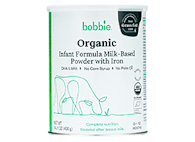
Formula type: Cow’s milk
Primary ingredients: Organic lactose, organic nonfat milk, organic whey protein concentrate
Bobbie’s European-style formula is USDA-certified organic and was among our top choices for low or nondetected contaminants. It’s made with organic lactose and organic nonfat milk, and features a 60:40 whey to casein protein ratio that matches what’s found in breast milk. This formula is also free of palm oil, corn syrup, or other alternative sugars.
Bobbie Organic Gentle Infant Formula
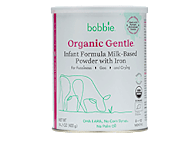
Formula type: Partially hydrolyzed (also labeled Sensitive or Gentle)
Primary ingredients: Organic lactose, organic partially hydrolyzed whey protein
Some babies may do better on a gentle or sensitive formula that features partially hydrolyzed proteins, but note that the terms “gentle” and “sensitive” don’t have a defined meaning under FDA regulations. Bobbie’s Organic Gentle formula contains organic lactose as the first ingredient and organic partially hydrolyzed whey protein as the primary protein source. These partially broken-down proteins may be easier on an infant’s developing digestive system, but talk with your pediatrician about what’s best for your baby.
Bobbie Organic Whole Milk Infant Formula
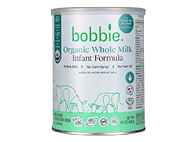
Formula type: Cow’s milk
Primary ingredients: Organic lactose, organic whole milk, organic whey protein concentrate, organic nonfat milk
Modeled after Bobbie’s original formula but with a whole-milk fat source, the Bobbie Organic Whole Milk formula also ranks among CR’s top choices in our baby formula contaminant testing. It contains both organic lactose and organic whole milk.
Earth's Best Organic Dairy Infant Formula
Formula type: Cow’s milk
Primary ingredients: Organic lactose, organic nonfat milk, organic whey protein concentrate
The Earth’s Best Organic Dairy Infant Formula is made with organic lactose and organic nonfat milk, with no corn syrup solids. It also contains added lutein for eye development and DHA and ARA fatty acids for cognitive development, as well as prebiotics to support infant digestion. A USDA-certified organic formula, Earth’s Best doesn’t include any genetically modified ingredients. According to the company, their cows are fed organic grain, grass, and hay.
Earth's Best Organic Sensitivity Infant Formula
Formula type: Sensitive or Gentle
Primary ingredients: Organic glucose syrup solids, organic whey protein concentrate, organic milk protein concentrate
The Organic Sensitivity Infant Formula from Earth’s Best has organic glucose solids as its primary ingredient, along with organic whey protein concentrate and milk protein concentrate. It contains 95 percent less lactose than Earth’s Best standard infant formula, according to the company, though experts say it’s rare that an infant would have lactose intolerance or sensitivity. (Lactose is the primary milk sugar in breast milk.) Still, if you’re looking for a gentle formula that’s organic, this one was among the top choices in CR’s tests for contaminants. Good to know: The proteins in this sensitive formula aren’t listed as partially hydrolyzed, so talk with your pediatrician about whether it’s good for your child. Earth’s Best also offers an Organic Gentle formula that includes partially hydrolyzed proteins, though CR hasn’t tested it.
Happy Baby Organics Organic Infant Formula
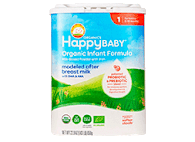
Formula type: Cow’s milk
Primary ingredients: Organic lactose, organic nonfat milk, organic galactooligosaccharides (GOS, a type of prebiotic), organic whey protein concentrate
The Organic Infant Formula from Happy Baby Organics has probiotics and prebiotics to support digestive health and immune system development. It contains organic lactose, organic nonfat milk, and organic GOS as its primary ingredients, and uses organic whey protein concentrate as its major protein source. It’s formulated with a blend of organic vegetable oils, including palm, coconut, sunflower, and canola oils.
Best Organic Baby Formulas: Liquid/Ready to Feed
Pure Bliss by Similac Organic Ready to Feed
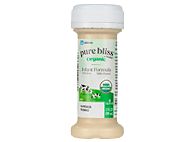
Formula type: Ready to feed
Primary ingredients: Water, organic lactose, organic nonfat milk
It’s difficult to find an organic liquid infant formula, but the Pure Bliss by Similac Organic Ready to Feed formula was among CR’s top choices in our contaminant testing. It has organic lactose and organic nonfat milk as primary ingredients, and doesn’t contain palm oil as a fat source or corn syrup as a sweetener.
How CR Tests Baby Formula
Infant formula is one of the most tightly regulated foods on the market, and all infant formula sold in the U.S. undergoes regular quality and safety testing.
But despite stringent oversight of many aspects of formula production, there are currently no federal limits on the levels of toxic elements such as lead, arsenic, mercury, cadmium, or contaminants like BPA, acrylamide, and PFAS. Consumer Reports scientists partnered with an outside lab to test dozens of samples of powdered, liquid, and ready-to-feed infant formula for contaminants in two rounds of testing. (You can see the full methodology for our most recent round of testing here, and the methodology for our first round of testing here.) Our test results highlight that there are safer alternatives when it comes to reducing your baby’s exposure to toxic heavy metals and other contaminants in infant formula, and that it’s possible to produce formula that doesn’t contain concerning levels of toxic contaminants.
Differences Between Organic and Conventional Baby Formulas
Nutrition: Because all infant formulas registered with the FDA must meet strict nutritional guidelines, there aren’t major differences in nutrition between organic and conventional formulas. Some research has shown that organic cow’s milk may have higher levels of naturally occurring minerals, such as calcium, potassium, phosphorus, and molybdenum, but may have lower levels of other minerals, such as copper, zinc, iodine, and selenium, than conventional cow’s milk. But both conventional and organic milk are fortified with additional nutrients to meet the FDA’s requirements. Organic cow’s milk may also have higher levels of fatty acids than conventional milk.
Pesticide and antibiotic residue exposure: The most significant difference between organic formula and traditional formula may be in the levels of trace synthetic pesticides, herbicides, and antibiotics. Research shows that organic formulas contain lower levels of synthetic pesticides and herbicides than formulas that are produced conventionally, and we know that even low levels of pesticide exposure in infancy can negatively affect an infant’s neurological and behavioral development. But we still need more research on whether the potential risk of pesticide exposure from conventional infant formula is significant enough to affect infant development. A 2019 analysis of the contaminants in organic and conventional cow’s milk sold in stores found that residue of antibiotics was detected in 60 percent of the samples of conventional cow’s milk tested, whereas none were detected in the samples of organic milk.
Cost: If you’re feeding your baby formula, it’s likely that it will make up a significant portion of their diet in their first year of life. You’ll want to choose a formula that your baby tolerates well, is safe, and is affordable. Organic infant formulas tend to be more expensive per ounce than conventional formulas and may not be covered by supplemental benefits, like WIC.
Other elements of concern: In CR’s tests, not all organic formulas we analyzed had lower levels of heavy metals. Buying organic may mean that a product is lower in synthetic pesticides, but it doesn’t necessarily mean that the formula is free from other toxic elements, such as lead, arsenic, cadmium, or mercury. Still, many of the organic formulas CR has tested had non-detectable levels of heavy metals, showing that it’s possible to make safer infant formula.
See the full list of results from our independent lab tests on heavy metals and other toxic elements in infant formula here. If you have further questions about choosing an infant formula for your baby, your pediatrician is your best resource.


