The redesign year indicates that the car is either introduced for the first time or an existing model has been
significantly re-engineered. The more extensive or complicated the redesign, the higher the risk of reliability problems.
2022 Model Redesign Year
The redesign year indicates that the car is either introduced for the first time or an existing model has been
significantly re-engineered. The more extensive or complicated the redesign, the higher the risk of reliability problems.
The Outlander is a compact SUV that comes with a tiny third-row seat.
For 2026, the only powertrain is a 174-hp, 1.5-liter four-cylinder turbo mild hybrid that's mated to a CVT.
It replaces the sluggish 2.5-liter four-cylinder we tested.
Handling is nimble and secure, but the steering is overly light, with an unnaturally quick turn-in response.
On the highway, the driver has to make constant corrections to stay in the lane.
The ride is stiff as the large wheels crash over potholes, and wind noise is noticeable at highway speeds.
Most controls are easy to use, including the infotainment system.
Notable Changes
This vehicle is currently being tested by our experts.
Road test score is a composite based on more than 50 tests and evaluations at our 327-acre test facility in
Colchester, Conn., on cars that Consumer Reports has purchased. Among the many tests are assessments of emergency-handling, braking capabilities,
fuel economy, ride, seat comfort, headlights, and controls.
Road Test Score
Road test score is a composite based on more than 50 tests and evaluations at our 327-acre test facility in
Colchester, Conn., on cars that Consumer Reports has purchased. Among the many tests are assessments of emergency-handling, braking capabilities,
fuel economy, ride, seat comfort, headlights, and controls.
Predicted Reliability
Our extensive survey data, combined with our technical knowledge, allows us to expertly predict the reliability of new and redesigned models.
Predicted Reliability
Our extensive survey data, combined with our technical knowledge, allows us to expertly predict the reliability of new and redesigned models.
Predicted Owner Satisfaction
Our extensive survey data, combined with our technical knowledge, allows us to expertly predict the owner satisfaction of new and redesigned models.
Predicted Owner Satisfaction
Our extensive survey data, combined with our technical knowledge, allows us to expertly predict the owner satisfaction of new and redesigned models.
Base MSRP Range
$29,995 - $44,845
Destination Charge: $1745
Destination Charge
This charge covers the cost of transporting a vehicle from a carmaker’s U.S. factory or port of entry to its dealerships. Destination charges are typically not negotiable. Occasionally some select model trims will have a slightly higher fee than others.
Destination Charge
This charge covers the cost of transporting a vehicle from a carmaker’s U.S. factory or port of entry to its dealerships. Destination charges are typically not negotiable. Occasionally some select model trims will have a slightly higher fee than others.
Destination Charge
This charge covers the cost of transporting a vehicle from a carmaker’s U.S. factory or port of entry to its dealerships. Destination charges are typically not negotiable. Occasionally some select model trims will have a slightly higher fee than others.
This vehicle is currently being tested by our experts.
Road Test Score
Road Test Score
Road test score is a composite based on more than 50 tests and evaluations at our 327-acre test facility in
Colchester, Conn., on cars that Consumer Reports has purchased. Among the many tests are assessments of emergency-handling, braking capabilities,
fuel economy, ride, seat comfort, headlights, and controls.
Road Test Score
Road test score is a composite based on more than 50 tests and evaluations at our 327-acre test facility in
Colchester, Conn., on cars that Consumer Reports has purchased. Among the many tests are assessments of emergency-handling, braking capabilities,
fuel economy, ride, seat comfort, headlights, and controls.
Predicted Reliability
Our extensive survey data, combined with our technical knowledge, allows us to expertly predict the reliability of new and redesigned models.
Predicted Reliability
Our extensive survey data, combined with our technical knowledge, allows us to expertly predict the reliability of new and redesigned models.
Predicted Owner Satisfaction
Our extensive survey data, combined with our technical knowledge, allows us to expertly predict the owner satisfaction of new and redesigned models.
Predicted Owner Satisfaction
Our extensive survey data, combined with our technical knowledge, allows us to expertly predict the owner satisfaction of new and redesigned models.
Road test score is a composite based on more than 50 tests and evaluations at our 327-acre test facility in
Colchester, Conn., on cars that Consumer Reports has purchased. Among the many tests are assessments of emergency-handling, braking capabilities,
fuel economy, ride, seat comfort, headlights, and controls.
Road Test Score
Road test score is a composite based on more than 50 tests and evaluations at our 327-acre test facility in
Colchester, Conn., on cars that Consumer Reports has purchased. Among the many tests are assessments of emergency-handling, braking capabilities,
fuel economy, ride, seat comfort, headlights, and controls.
NA
Predicted Reliability
Our extensive survey data, combined with our technical knowledge, allows us to expertly predict the reliability of new and redesigned models.
Predicted Reliability
Our extensive survey data, combined with our technical knowledge, allows us to expertly predict the reliability of new and redesigned models.
/ 100
Predicted Owner Satisfaction
Our extensive survey data, combined with our technical knowledge, allows us to expertly predict the owner satisfaction of new and redesigned models.
Predicted Owner Satisfaction
Our extensive survey data, combined with our technical knowledge, allows us to expertly predict the owner satisfaction of new and redesigned models.
/ 100
Notable Changes
This vehicle is currently being tested by our experts.
Stay up to date when the latest road test reports & ratings are released, and get car news, buying advice,
maintenance tips and more. Sign up for our FREE weekly Cars Newsletter.
2022-Present
2022 Model Redesign Year
The redesign year indicates that the car is either introduced for the first time or an existing model has been
significantly re-engineered. The more extensive or complicated the redesign, the higher the risk of reliability problems.
2022 Model Redesign Year
The redesign year indicates that the car is either introduced for the first time or an existing model has been
significantly re-engineered. The more extensive or complicated the redesign, the higher the risk of reliability problems.
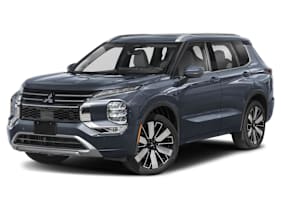
The seven-passenger Outlander is fully redesigned for 2022.
It shares its 2.5-liter, four-cylinder engine and much of its underpinnings with the Nissan Rogue, although a small third-row seat is exclusive to the Mitsubishi.
Acceleration is leisurely but the continuously variable transmission is responsive, and the Outlander managed 25 mpg overall.
Handling is quite nimble and secure but the steering is overly light and nervous.
The ride is stiff and wind noise is noticeable.
The first two rows of seats are comfortable, but the third row is tiny.
Most controls are easy to use, including the infotainment system.
The joystick-like electronic gear selector, though, suffers from unintuitive labeling.
Standard active safety features include FCW, AEB with pedestrian detection, BSW, RCTW, and LDW.
The plug-in hybrid, which has been on the previous generation's platform, has also been redesigned. For 2026, the 2.5-liter engine was replaced with a new 1.5-liter four-cylinder turbo mild hybrid that's mated to a CVT.
The redesign year indicates that the car is either introduced for the first time or an existing model has been
significantly re-engineered. The more extensive or complicated the redesign, the higher the risk of reliability problems.
2016 Model Redesign Year
The redesign year indicates that the car is either introduced for the first time or an existing model has been
significantly re-engineered. The more extensive or complicated the redesign, the higher the risk of reliability problems.
Mitsubishi's small SUV alternates between mediocrity and competitiveness.
The original Outlander was powered by a noisy 2.4-liter four-cylinder, which delivered unimpressive acceleration and fuel economy.
Handling suffered from overly light steering and pronounced body lean.
A 2007 redesign considerably improved the Outlander, making it a competitive small SUV.
Originally available only with a punchy V6, an improved four-cylinder arrived in 2008, returning 22 mpg overall.
Responsive steering with good driver feedback gave the Outlander a sporty feel.
An optional third-row seat was unusual for the class.
A 2014 redesign stripped the Outlander of any athleticism, making it feel dated and cut-rate.
Emphasizing utility on a budget, the third-row seat became standard. A plug-in hybrid joins the line in 2018. Updates for 2020 included standard forward collision warning with pedestrian detection, automatic emergency braking, and lane departure warning on all but the base trim. For 2021, the Outlander only comes as a plug-in hybrid that has been updated to a 2.4-liter four cylinder engine with an upgraded electric motor that provides a combined output of 221-hp.
It can do a claimed 24-miles on electric power before switching to hybrid mode.
The 2.4-liter four-cylinder and the 3.0-liter V6 engines have been dropped.
Outdated and outclassed, the Outlander struggles to compete.
A tiny third-row seat, that is a high point, is not offered in the plug-in hybrid.
When we tested the Outlander with the four-cylinder engine, its ride felt too buoyant and not tied-down.
Handling was clumsy, with slow steering response and lots of body lean in corners.
The redesign year indicates that the car is either introduced for the first time or an existing model has been
significantly re-engineered. The more extensive or complicated the redesign, the higher the risk of reliability problems.
2014 Model Redesign Year
The redesign year indicates that the car is either introduced for the first time or an existing model has been
significantly re-engineered. The more extensive or complicated the redesign, the higher the risk of reliability problems.
Emphasizing utility on a budget, the 2014 redesign stripped the Outlander of any athleticism, making it feel dated and cut-rate.
Compared to the previous Outlander, this retooled model handles clumsily, tending to lumber through corners feeling like a larger vehicle than it is.
The cabin is noisy, the front seats aren't supportive enough, and interior trim looks cheap and feels insubstantial.
On the plus side, the third-row seat became standard.
Overall though, we see little reason to consider buying the Outlander.
The redesign year indicates that the car is either introduced for the first time or an existing model has been
significantly re-engineered. The more extensive or complicated the redesign, the higher the risk of reliability problems.
2007 Model Redesign Year
The redesign year indicates that the car is either introduced for the first time or an existing model has been
significantly re-engineered. The more extensive or complicated the redesign, the higher the risk of reliability problems.
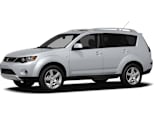
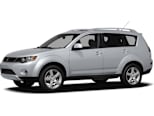
The 2007 redesign considerably improved the Outlander, making it a competitive small SUV with a refined and responsive powertrain.
The interior is roomy and offers a tiny third-row seat, which is an unusual option in this category.
A backup camera integrated into the navigation system is another welcomed optional feature.
Alert steering with good driver feedback gives this edition of the Outlander a sporty feel to accompany its agile handling.
However, to accomplish this, ride quality is on the stiff side.
Road noise is pronounced too.
Fit and finish are also a bit of a let down.
Originally available only with a punchy V6, an improved four-cylinder arrived in 2008, returning 22 mpg overall.
The redesign year indicates that the car is either introduced for the first time or an existing model has been
significantly re-engineered. The more extensive or complicated the redesign, the higher the risk of reliability problems.
2003 Model Redesign Year
The redesign year indicates that the car is either introduced for the first time or an existing model has been
significantly re-engineered. The more extensive or complicated the redesign, the higher the risk of reliability problems.
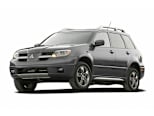
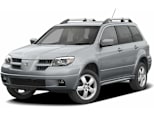
Over the years, Mitsubishi's small SUV has alternated between mediocrity and competitiveness.
As an example, while ride quality is reasonably comfortable, the 2003 version of the Outlander doesn't compete well with the best models in this class.
Although it has reasonable passenger space; acceleration, handling, and fuel economy are all unimpressive.
However, it should be noted side airbags were made standard for the 2006 model year.
You will get digital access to reviews and ratings for over 8,500 products and services
to help you make better choices for life’s big moments and the everyday ones in between.
If you feel you have received this message in error, please view our customer care
FAQs or access your
account information here.